Season 1 · Episode 25
The Doorway Problem
Published 21st September 2026
The weather had been reviewed. It remained damp.
After the Storm
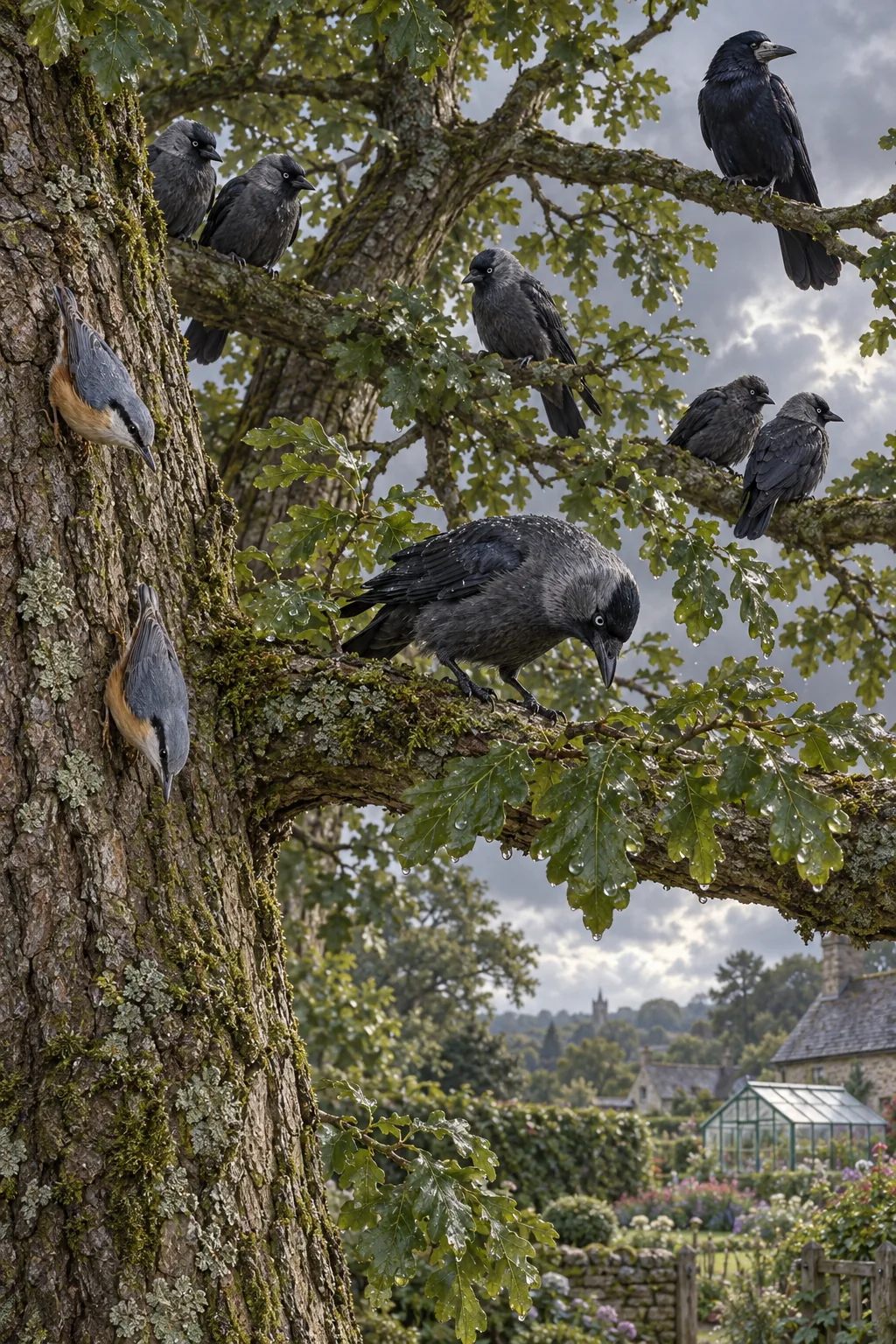
By early afternoon, the storm had finally departed, leaving behind a garden that looked washed, offended and slightly surprised to be dry.
The Jacks returned to the Oak in cautious groups, as though arriving first might make them responsible for explaining the weather. Mr Jack Daw inspected a branch, found it damp, and called an informal consultation about what could be done.
“Nothing,” said another Jack.
“We have not discussed it yet.”
“We have discussed it every time it rains.”
“That is called experience.”
The afternoon passed in a cool, moving grey. The Jacks rearranged themselves through the Oak. A Rook occupied the highest open branch, wisely said nothing, and enjoyed the silence more than anyone else. Hopalong worked his way along the trunk with his usual refusal to acknowledge that other creatures possessed problems. Later, Derek came down from above him, giving the impression that trees had been designed entirely for his private convenience.
The Unnamed Owl
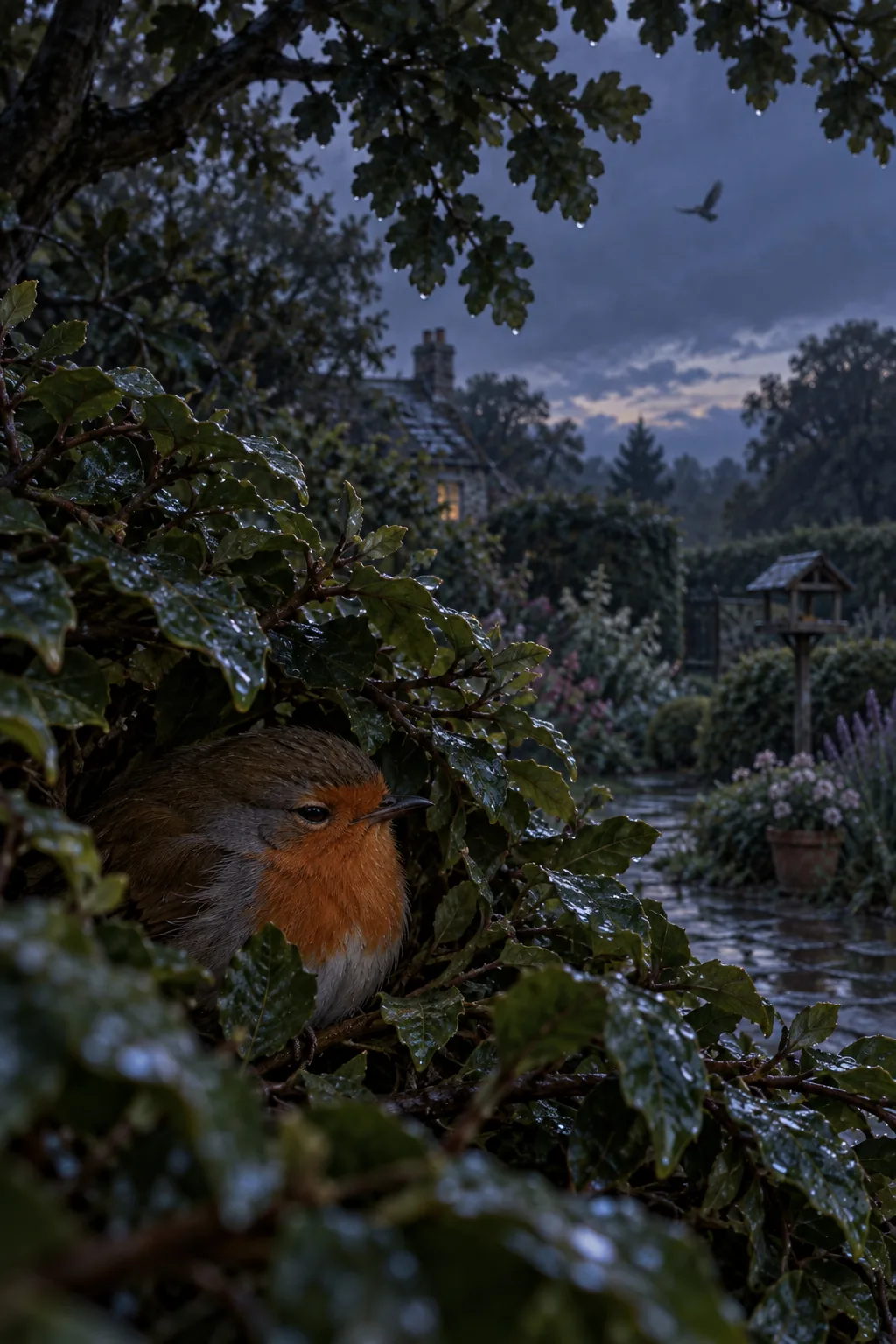
At dusk, the Jacks drew closer together. The garden settled into the sort of quiet that made every leaf sound as though it knew something.
An owl interrupted it.
The moment was brief and unresolved. Batman Smith, dozing in the shelter of the hedge, woke just long enough to listen and then thought better of making a name out of it. He had learned, recently, that the night could make a fool of a Robin without even trying.
“No guesses,” he told himself.
Then he went back to sleep.
A Family Matter
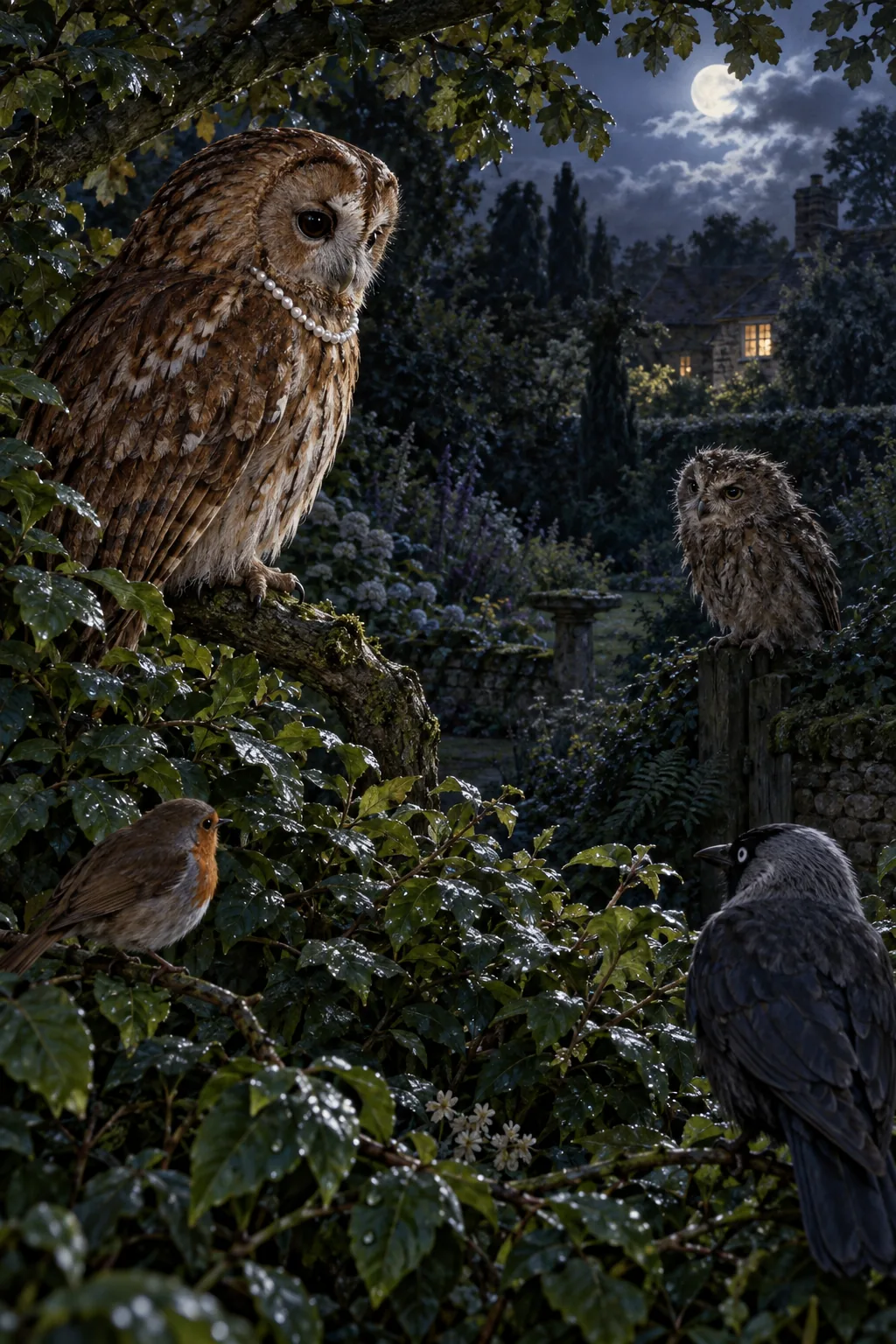
The real trouble began after midnight.
Marjorie was already waiting beyond the hedge, her pearl necklace catching the moonlight and her whole bearing announcing that the family had reached the part of a conversation nobody had wanted. Marlboro answered from deeper in the dark. She sounded like a daughter who had returned to the subject not to discuss it, but to win it.
The Square woke in stages. Batman lifted his head from the hedge. Mr Jack Daw opened one eye from the Oak and then the other, which he later insisted had been a deliberate investigative decision. Even the Summerhouse seemed to hold itself still.
“You are an adult owl now,” said Marjorie.
“I LIVE HERE,” said Marlboro.
Marjorie paused. This was not the pause of an owl who had been defeated. It was the pause of a mother deciding exactly how devastating to be.
“You *were raised* here,” she said. “There is a difference.”
Marlboro’s answer was immediate, incredulous, and clearly founded on a lifetime of knowing where every familiar branch was.
Batman looked at Mr Jack Daw. “What is the difference?”
“Do not ask questions during a maternal correction,” Mr Jack Daw whispered. “You will be assigned homework.”
For several minutes, mother and daughter carried the argument across the sleeping garden. Marjorie had standards, history, and the dangerous calm of someone who had expected this eventuality. Marlboro had conviction, outrage, and the absolute certainty that being told something was sensible made it intolerable. Neither was prepared to yield the Square, the night, or the last word.
Harold Enters
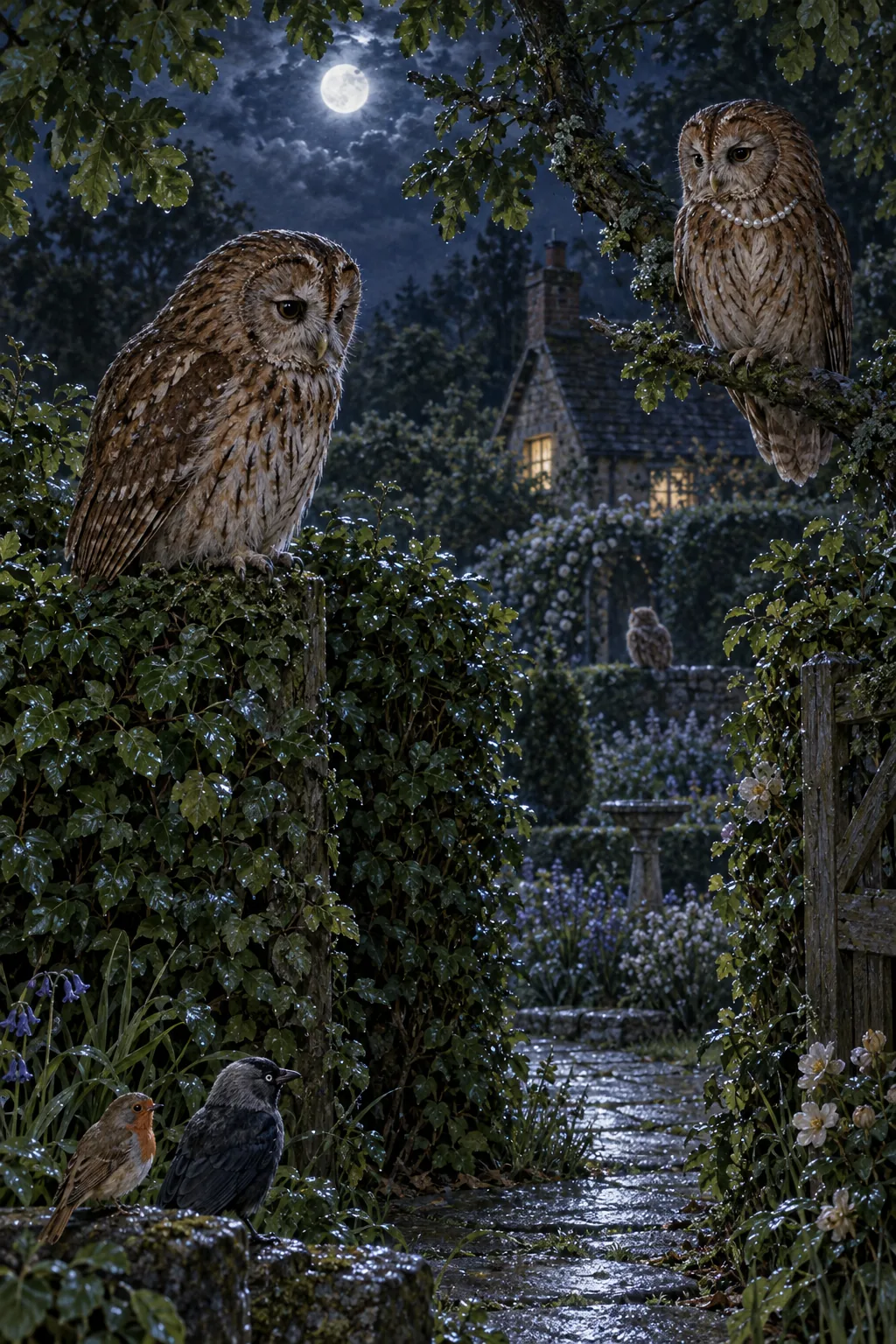
Then Harold arrived at the edge of it.
He did not enter the discussion. At first.
He stayed just beyond the hedge, caught in the very particular plight of a father whose daughter was furious and a husband whose wife was right. For several long moments, he made it clear that he understood this was a mother-and-daughter argument, and that entering it would be a terrible mistake.
Then he said, very carefully, “Marlboro.”
It was the sort of paternal interjection intended to restore order by naming it. It did not restore order.
Marjorie made another point. Marlboro answered it. Harold shifted once in the darkness, then twice. He had all the desperate hesitation of an owl standing in a doorway while his wife and daughter dismantled the room around him.
Batman leaned forward.
“He is going to explain himself,” he whispered.
“That,” said Mr Jack Daw, “is how disasters begin.”
At last, Harold made the worse decision and tried to explain himself.
The effect was immediate.
Marlboro held her ground for one last furious moment. Then, after a silence so abrupt it made the Oak feel exposed, she seemed to withdraw from the argument altogether. The darkness beyond the hedge took her side of the conversation and closed it away.
Batman waited.
“Has she gone?”
Mr Jack Daw listened toward the far garden.
“She has made going an option,” he said.
Marjorie did not appear reassured. Harold, having crossed from worried father to active participant, was now alone with his wife and the consequences of having said something. He and Marjorie continued in lower, more deliberate terms. It was no longer an argument with their daughter in it; it was the long, careful sorting of what the two parents would do with the argument she had left behind.
There were pauses in which Harold seemed to discover that every possible fatherly response had been wrong in a different direction. Marjorie was unmoved by this discovery. Somewhere in the middle of it, he tried the patient tone of a husband who believed peace might still be negotiated. Marjorie made clear that peace had never been the issue.
Batman stopped pretending to understand.
Mr Jack Daw did not. “He has selected a position,” he said.
“Which one?”
“The wrong one, almost certainly.”
But Harold stayed. The conversation continued through the cool, moonlit hours, husband and wife refusing to leave the other with an easy ending. At last Marjorie fell silent.
Harold waited.
The Square waited with him.
“We raised her to leave,” said Harold.
Marjorie gave him no answer.
She did not forgive him. She did not argue. She simply held the silence between them until it became clear that Harold’s sentence had not solved anything, but had named the part of it neither parent could escape. Somewhere beyond the hedge, Marlboro had chosen her own darkness. Marjorie and Harold remained where they were.
Dawn Quiet
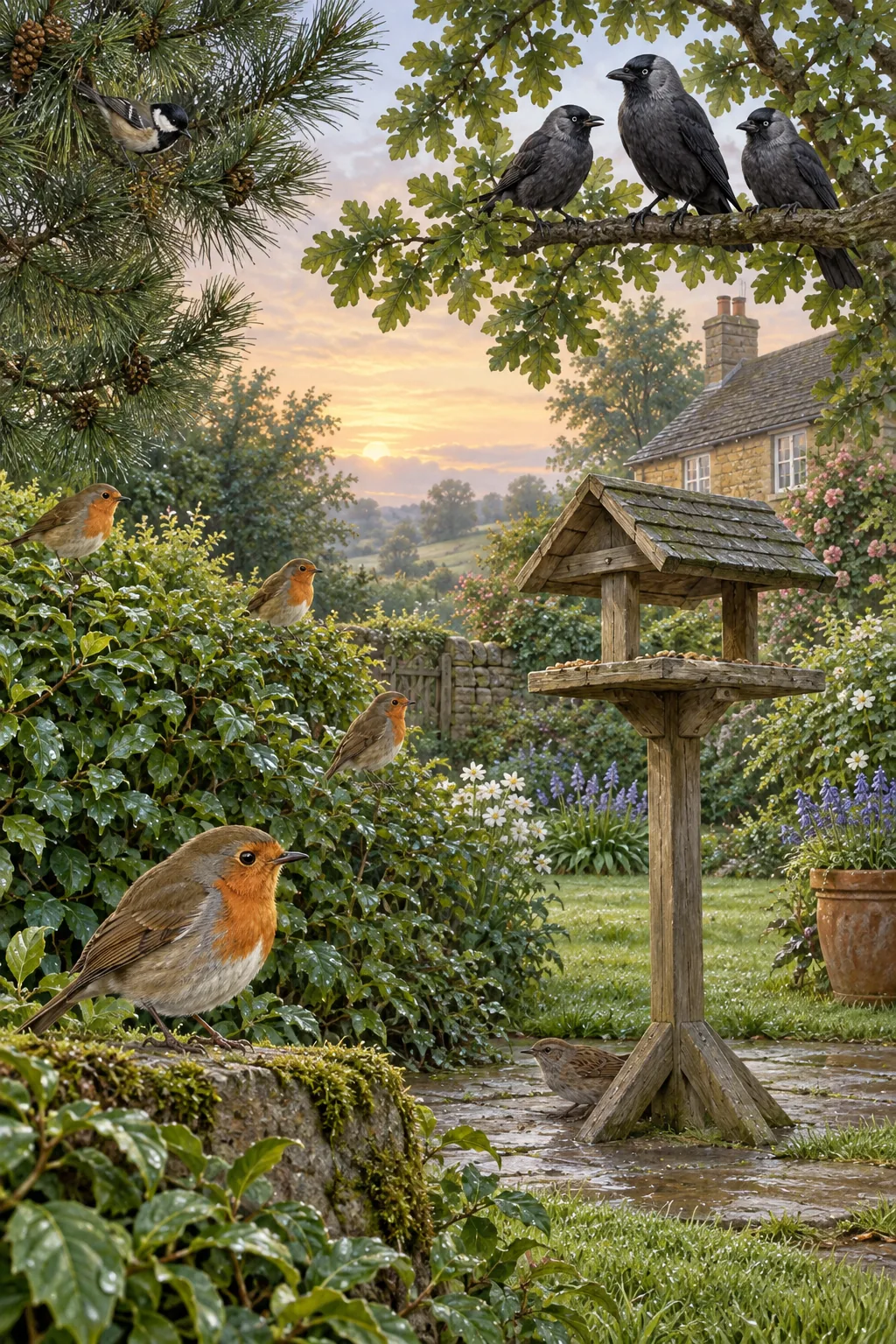
Dawn came quietly, as though it had been instructed not to interfere. A small group of Robins appeared around the hedge, careful and subdued. Brenda emerged beneath the bird table, saw Batman’s expression, and immediately chose not to ask.
The Jacks arrived later, louder than necessary. Percy flickered through the Pine. Mr Jack Daw took one look at Batman and said, “No committee.”
Batman nodded.
“Family matter,” said Mr Jack Daw.
“Exactly.”
Ordinary Business
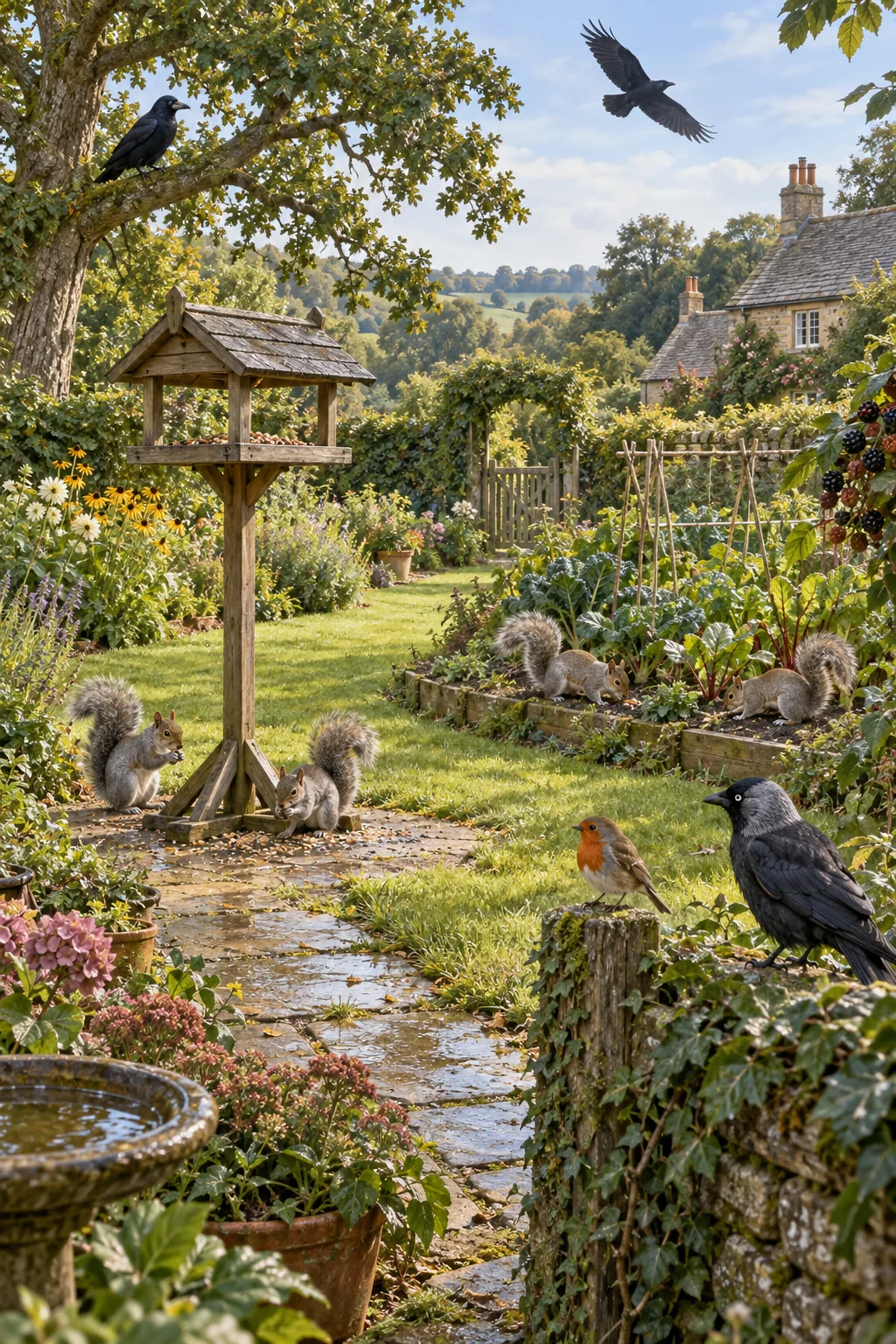
By the time Stirling’s squad emerged along the lawn, the Square had begun the slow, ordinary business of pretending that nothing remarkable had happened. The squad worked beneath the bird table and along the Vegetable Garden border. No Magpie appeared to observe them. No pigeon arrived to be missed. The Jacks watched in silence for nearly a full minute, which was widely regarded as an act of collective maturity.
It did not last.
“Do you think she will go?” Batman asked.
Mr Jack Daw looked towards the hedge, where the night had vanished into a pale morning.
“I think she will,” he said quietly. “That is what she was raised to do.”
Later, a Rook took the Oak. Mortimer passed over the Square once, saw the assembled faces, and declined to land.
By the end of the morning, the garden was full of ordinary business again.
Nobody believed it.
DUFF. DUFF. DUFF-DUFF-DUFF.